Introduction to NDT
Non-Destructive Testing (NDT) plays a critical role in ensuring the safety, reliability, and longevity of equipment across various industries, particularly in sectors like oil and gas, petrochemical, and construction. This method enables the inspection of materials and structures without causing damage or altering their usability. As such, NDT is vital for maintaining operational efficiency and avoiding costly failures or downtime.
In drilling operations, where equipment faces extreme conditions such as high pressure, corrosive environments, and heavy mechanical loads, NDT ensures that assets remain in optimal condition throughout their lifecycle. It provides the necessary foundation for safety, regulatory compliance, and proactive maintenance.
Key NDT Methods and Applications
1. Visual Testing (VT)
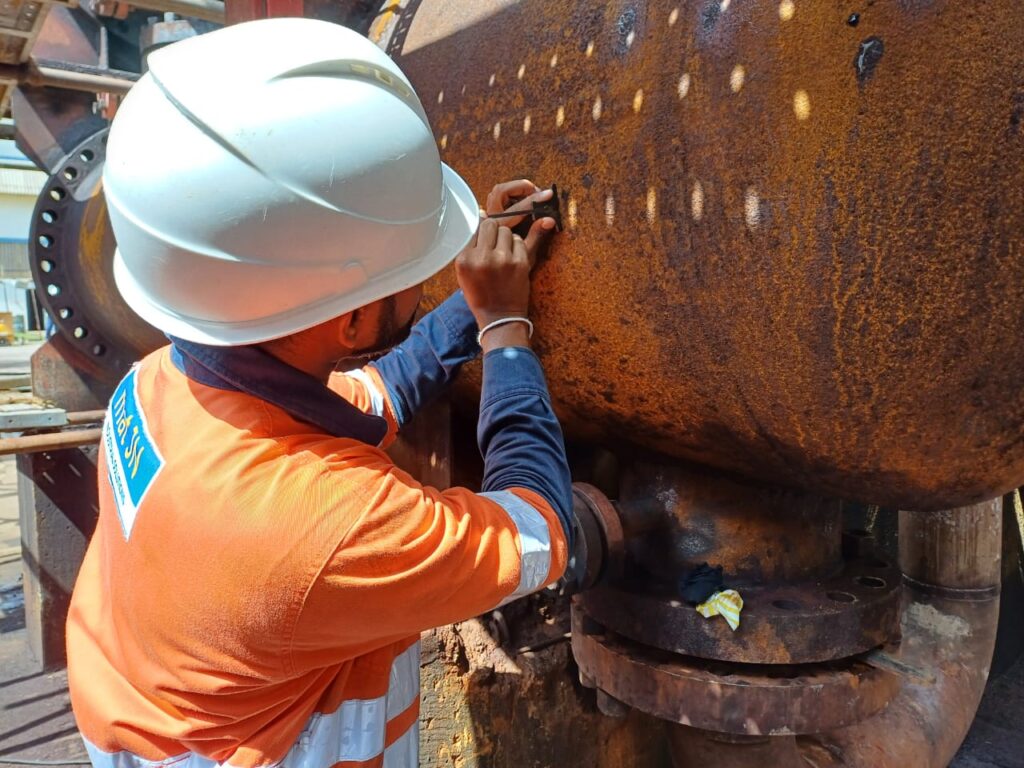
Visual Testing (VT) is the most basic and widely used NDT method. It involves a direct visual inspection of materials or structures to detect visible defects like cracks, corrosion, deformation, or surface irregularities. Inspectors assess the surface conditions using tools like magnifying glasses or borescopes to identify defects that may compromise the integrity of the material.
Applications:
- Inspecting pipelines, pressure vessels, and structural components like Rig Mast, Substructure, Rig Floor, etc..
- Evaluating the quality of welds and joints, ensuring they are free of undercuts, porosity, spatter or misalignments.
2. Magnetic Particle Testing (MT)
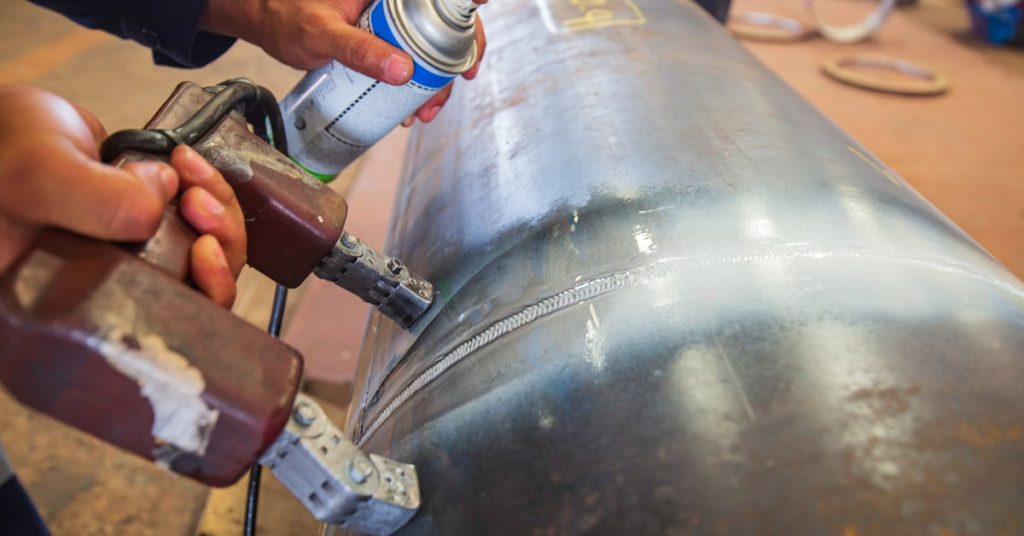
Magnetic Particle Testing (MT) is used to detect surface and near-surface discontinuities in ferromagnetic materials. The material is magnetized, and magnetic particles are applied to the surface. These particles accumulate at areas where flux leakage occurs, such as cracks or other surface defects.
Applications:
- Detecting cracks in Steel Structures, High pressure Equipment, drill pipes, BHA Components and other steel components used in drilling operations.
- Inspecting critical Critical Well Control Equipment,, such as BOPs, Choke Manifold, etc.
3. Ultrasonic Testing (UT)
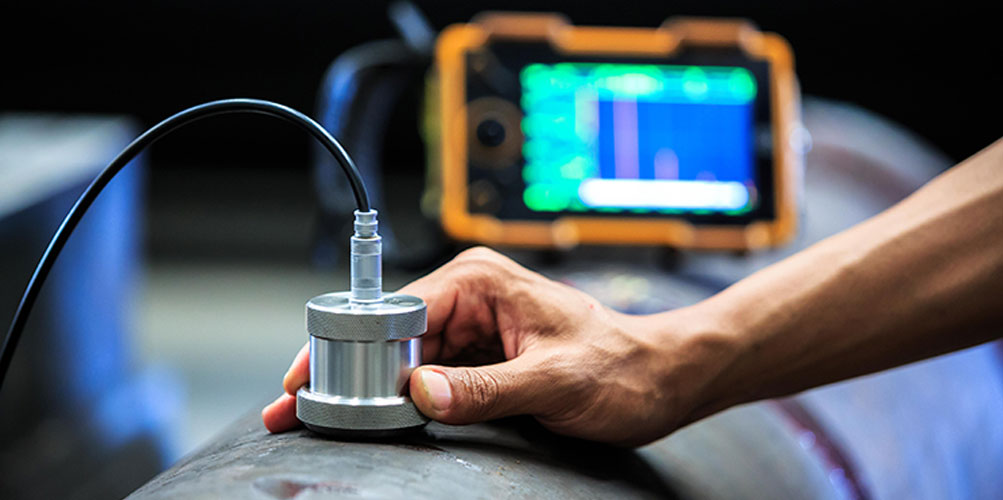
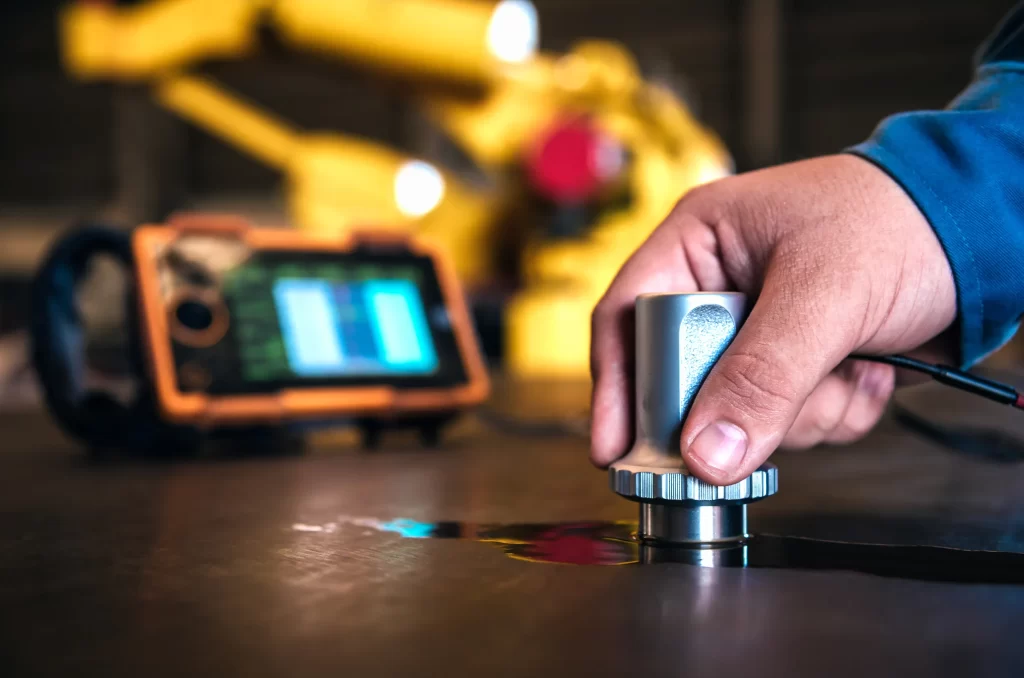
Ultrasonic Testing (UT) employs high-frequency sound waves to measure material thickness, detect internal flaws, and assess corrosion or erosion damage. It is widely used for evaluating the integrity of materials like metals and metal alloys, which are commonly used in drilling rigs and associated equipment.
Applications:
- Assessing wall thickness and detecting internal flaws in tubulars, OCTG, and structural components.
- Evaluating pressure vessels, storage tanks, and heat exchangers for signs of wear or corrosion.
4. Penetrant Testing (PT)
Penetrant Testing (PT) is a surface inspection method that involves applying a liquid penetrant to the surface of non-ferrous materials to reveal cracks or surface-breaking defects. After the penetrant is applied and excess liquid is removed, a developer is used to highlight areas where the penetrant has seeped into defects.
Applications:
- Detecting surface cracks in Non magnetic tubular equipment such NMDCs, directional drilling equipment, etc.

Conclusion
Non-Destructive Testing (NDT) is an indispensable tool for ensuring the safety, reliability, and longevity of equipment in industries like oil and gas, petrochemical, and construction. By employing a range of NDT methods, companies can identify defects early, prevent catastrophic failures, and reduce downtime, ultimately saving time and money while enhancing operational efficiency.
The methods discussed—such as visual testing, ultrasonic testing, magnetic particle testing and liquid penetrant testing —are essential for maintaining the integrity of critical assets used in drilling operations, pipelines, and related operations. Regular and thorough NDT inspections help companies remain compliant with industry standards, ensure the safety of their personnel, and protect valuable assets.
As technology advances, the NDT field continues to evolve, providing even more sophisticated ways to monitor and maintain the equipment essential to the energy sector. Embracing these methods ensures that companies are well-equipped to handle the challenges posed by harsh operating environments and maintain operational excellence.
Why Choose Eiger Engineering & Oilfield Services (EEOS)?
At Eiger Engineering & Oilfield Services, we understand that precision and reliability are paramount when it comes to Non-Destructive Testing. With decades of experience in the oilfield and energy sectors, we provide high-quality, API-certified NDT services tailored to meet the unique demands of the industry. Here’s why you should choose us:
- Industry-Proven Experience: With over 40+ years of combined experience, we understand the complexities and challenges of oilfield operations. Our expertise spans across drilling, inspection, and asset management.
- Certified & Compliant: We adhere to API SPEC Q2, ISO 9001:2015, ASTM, and other globally recognized standards. Our inspections are not just thorough; they are backed by certifications that ensure compliance and safety.
- Advanced Inspection Technologies: We leverage cutting-edge NDT techniques, including Ultrasonic Testing (UT), Magnetic Particle Testing (MT), and Electromagnetic inspection (EMI) to provide detailed and accurate inspections, ensuring the integrity of your equipment and infrastructure.
- Proactive Risk Management: We believe in preventive maintenance and safety-first approaches. Our inspections allow for early defect detection, reducing the risk of failures and improving your overall operational efficiency.
- Comprehensive Service Portfolio: Whether it’s tubular inspection, lifting equipment certification, or full rig assessments, we offer a wide range of services tailored to the needs of the oil and gas sector.
Get in Touch
To ensure the safety and longevity of your critical assets, trust Eiger Engineering & Oilfield Services to handle your NDT needs. We provide reliable, detailed, and compliant inspections to support your operational efficiency and safety.
Contact us today for a consultation or to schedule an inspection:
Visit Our Website