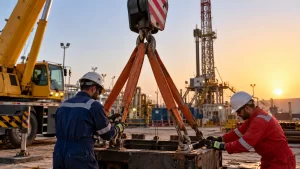

BOP inspection and certification help confirm that blowout preventers and related pressure-control equipment are in suitable condition for their intended service. A proper inspection program may include visual checks, non-destructive testing (NDT), pressure testing, functional checks, repairs, documentation, and certification based on the applicable equipment requirements.
For drilling contractors, oilfield operators, and equipment owners, regular inspection helps find damage, wear, corrosion, leaks, and other problems before they become serious operational risks.
What Is BOP Inspection?
BOP Inspection is the process of checking a blowout preventer and its related components to assess their physical condition, pressure integrity, and readiness for use.
A blowout preventer is a key part of a drilling well control system. Depending on the application, the equipment can include:
- Annular BOPs
- Ram BOPs
- Hydraulic connectors
- Drilling spools
- Valves
- Choke and kill equipment
- Pressure-control units
- Associated control systems
These components can experience high pressure, repeated pressure cycles, vibration, corrosion, erosion, and mechanical wear.
Featured Snippet: Why Is BOP Inspection Important?
BOP inspection is important because it helps identify defects, wear, leaks, corrosion, and other conditions that could affect well control. Inspection and testing also provide documented evidence of equipment condition and help operators meet applicable standards and service requirements.
What Does BOP Certification Mean?
BOP Certification means that the equipment has undergone the required inspection and testing within a defined scope and that the results have been documented against the applicable requirements.
Certification should not be viewed as only a certificate or piece of paper. The supporting inspection records, test results, equipment identification, findings, and corrective actions are also important.
A typical certification file may include:
| Record | Purpose |
|---|---|
| Equipment identification | Confirms the exact BOP or component inspected |
| Inspection report | Records inspection findings |
| NDT results | Documents detected or cleared indications |
| Pressure test results | Records pressure integrity testing |
| Repair records | Shows corrective work completed |
| Test equipment details | Supports test traceability |
| Certification document | Provides the final documented status |
The exact documentation depends on the equipment, inspection scope, customer requirements, manufacturer instructions, and applicable standards.
What Equipment Is Checked During Well Control Equipment Inspection?
Well Control Equipment Inspection can cover the BOP stack and other equipment used to control or contain well pressure.
Common equipment includes:
| Equipment | Main inspection areas |
|---|---|
| Annular BOP | Body, packing unit, seals, operation |
| Ram BOP | Ram blocks, seals, body, hydraulic operation |
| Valves | Body, connections, operation, leakage |
| Drilling spools | Body, flanges, sealing surfaces |
| Choke manifold | Valves, chokes, connections and pressure integrity |
| Choke and kill lines | Lines, connectors and pressure integrity |
| Pressure-control units | General condition and function |
| Control systems | Hydraulic/control components and operation |
API’s SC16 standards group covers equipment and systems related to drilling and well control, including API 16A for drill-through equipment, API 16C for choke and kill equipment, and API 16D for control systems.
Eiger Engineering & Oilfield Services (EEOS) specifically lists inspection and hydrotesting of BOPs and choke/standpipe manifolds, together with repair, servicing, re-certification, and visual, magnetic, and penetrant testing.
How Is BOP Inspection Performed?
A good inspection follows a planned process. The exact steps can change based on the equipment and inspection scope.
1. Review Equipment Records
Start by checking:
- Equipment identification
- Manufacturer information
- Rated working pressure
- Previous inspection reports
- Repair history
- Previous test results
- Applicable inspection requirements
This helps the inspector understand the equipment before physical inspection begins.
2. Perform a Visual Inspection
The equipment is checked for visible problems such as:
- Cracks
- Corrosion
- Erosion
- Deformation
- Surface damage
- Leakage
- Damaged threads
- Damaged sealing areas
- Loose or damaged connections
Visual inspection is often the first step because it can quickly identify obvious conditions that need further examination.
3. Perform NDT Where Required
Non-destructive testing can help identify defects that cannot be confirmed by visual inspection alone.
Common methods include:
| NDT Method | What It Can Help Find |
|---|---|
| VT – Visual Testing | Visible damage, corrosion and wear |
| UT – Ultrasonic Testing | Internal flaws and wall-thickness changes |
| MPI – Magnetic Particle Inspection | Surface and near-surface indications in suitable ferromagnetic materials |
| DPI – Dye Penetrant Inspection | Surface-breaking defects |
EEOS lists UT, MPI, DPI, and VT among its NDT capabilities and states that its NDT activities are performed using relevant ASTM, API, and internal procedures.
4. Carry Out Pressure Testing
Pressure testing is used where required to assess the pressure integrity of the equipment under specified test conditions.
For BOP systems, this can be an important part of verifying that pressure-containing components and connections perform as expected.
EEOS provides BOP hydrotesting and pressure-control equipment inspection as part of its services.
5. Record Findings
The inspector documents:
- Equipment condition
- Inspection methods used
- NDT results
- Pressure test results
- Defects found
- Repairs or corrective actions
- Final inspection status
6. Complete Certification
Once the required inspection and testing scope has been completed and the applicable acceptance requirements have been met, certification or re-certification documentation can be completed.
BOP Inspection vs BOP Testing vs BOP Certification
These terms are related, but they do not mean exactly the same thing.
| Activity | Main Purpose | Typical Output |
|---|---|---|
| BOP Inspection | Check equipment condition | Inspection findings/report |
| BOP Testing | Check performance or pressure integrity | Test results |
| BOP Certification | Document compliance/status after required inspection and testing | Certification record |
| BOP Repair | Correct identified defects | Repair documentation |
| BOP Re-certification | Confirm status after required work/testing | Updated certification |
Simple way to remember it:
Inspection = What condition is the equipment in?
Testing = Does it perform or hold pressure as required?
Certification = What does the documented result show?
The actual scope should always be based on the equipment, applicable requirements, manufacturer information, customer specification, and competent inspection procedures.
What Standards Apply to BOP Equipment?
Different BOP and well control components can fall under different API specifications.
| API Standard | General Equipment Area |
|---|---|
| API Spec 16A | Drill-through equipment |
| API Spec 16C | Choke and kill equipment |
| API Spec 16D | Control systems for drilling well control equipment |
| API Spec 6A | Wellhead and Christmas tree equipment |
API’s current standards catalog lists API 16A as Drill Through Equipment, API 16C as Choke and Kill Equipment, and API 16D as the specification for control systems for drilling well control equipment and diverter equipment.
API also identifies equipment such as ram BOPs, annular BOPs, hydraulic connectors, drilling spools, choke and kill lines, drilling chokes, and control systems within these relevant equipment categories.
Important: The correct standard and edition should be confirmed for the specific equipment and inspection scope. A general article or checklist should not replace the applicable standard or manufacturer’s requirements.
What Is Cementing Equipment Inspection?
Cementing Equipment Inspection involves checking cementing equipment for condition, integrity, and readiness for its intended operation.
Depending on the system, this may involve equipment such as:
- Cementing heads
- High-pressure lines
- Valves
- Manifolds
- Connections
- Pumps
- Pressure-containing components
Cementing Equipment Inspection Checklist
| Check | Why It Matters |
|---|---|
| Equipment identification | Confirms the correct equipment |
| External condition | Finds visible damage and corrosion |
| Connections | Helps identify damage or poor condition |
| Valves | Checks condition and operation |
| Pressure-containing parts | Supports pressure integrity |
| Hoses/lines | Checks wear and damage |
| Test records | Provides traceability |
| Repair history | Shows previous corrective work |
| Certification records | Confirms documented inspection status |
The exact inspection and testing requirements depend on the equipment design, operating pressure, manufacturer requirements, applicable standards, and operator procedures.
BOP Inspection Checklist
Before an inspection is closed, the following points can help organize the work:
- Equipment identification confirmed
- Manufacturer information checked
- Rated pressure confirmed
- Previous inspection records reviewed
- External condition inspected
- Corrosion and erosion checked
- Sealing surfaces examined
- Connections checked
- Required NDT completed
- Pressure testing completed where required
- Defects documented
- Repairs verified
- Test results recorded
- Inspection report completed
- Certification status documented
This is a general checklist, not a replacement for an applicable API specification, manufacturer procedure, regulatory requirement, or approved inspection procedure.
How Can Professional BOP Inspection Reduce Operational Risk?
A planned inspection program can provide several practical benefits:
1. Finds Problems Earlier
Inspection can identify corrosion, wear, cracks, leaks, and other defects before they develop into larger equipment problems.
2. Supports Equipment Integrity
Regular checks help operators understand the actual condition of pressure-control equipment.
3. Improves Documentation
Clear inspection and testing records make it easier to track equipment history and corrective actions.
4. Supports Compliance
Inspection programs can be aligned with applicable API requirements, customer specifications, manufacturer instructions, and local requirements.
5. Helps Reduce Unplanned Downtime
Finding a problem during planned inspection may allow repairs to be scheduled instead of waiting for an unexpected equipment failure.
Why Choose EEOS for BOP and Oilfield Inspection Services?
EEOS provides inspection, testing, maintenance, and oilfield technical services for operators, drilling contractors, and asset owners.
The company states that it was founded by oilfield professionals with more than 40 years of combined industry experience. Its team includes certified NDT inspectors, QA/QC coordinators, rig safety experts, lifting gear engineers, and API compliance advisors.
EEOS also states that it is Libya’s first API Spec Q2 registered company and maintains an active IADC membership for 2025.
Its quality policy states that the company maintains a documented quality management system meeting the requirements of API Q2 Specification, 2nd edition, and applies risk-based thinking and continuous improvement.
For companies that need broader inspection support, EEOS also provides NDT, drill pipe and BHA inspection, lifting equipment inspection, rig structure inspection, and dropped object surveys.
Final Takeaway
BOP inspection, testing, and certification are important parts of maintaining reliable well control equipment. A strong program combines visual inspection, NDT, pressure testing, documentation, repairs, and certification according to the applicable requirements.
For operators working with BOPs, choke and kill equipment, or other pressure-control systems, choosing a qualified inspection provider can make equipment condition easier to verify and manage.
EEOS provides BOP inspection, hydrotesting, pressure-control equipment inspection, repair, servicing, re-certification, and NDT services for oilfield operations. Companies requiring technical inspection support can contact EEOS for inspection and testing services and discuss the equipment, location, and required scope.
Frequently Asked Questions
How often should a BOP be inspected?
The required frequency depends on the equipment, service conditions, applicable standards, manufacturer requirements, operator procedures, and regulatory or customer requirements. There is no single inspection interval that applies to every BOP.
What is checked during BOP inspection?
A BOP inspection may include equipment identification, visual examination, sealing surfaces, connections, NDT, pressure testing, functional checks, previous records, and repair history.
Is BOP certification the same as BOP inspection?
No. BOP inspection is the examination of the equipment. BOP certification is the documented status resulting from the required inspection and testing within the defined scope.
What NDT methods are used for BOP inspection?
Depending on the component and inspection requirement, methods can include visual testing, ultrasonic testing, magnetic particle inspection, and dye penetrant inspection.
What is well control equipment inspection?
It is the inspection of equipment used to control or contain well pressure. This may include BOPs, valves, spools, choke and kill equipment, manifolds, and associated control systems.
Why is pressure testing important?
Pressure testing can help verify pressure integrity and identify leakage or other problems under specified test conditions. The correct test method and acceptance criteria depend on the equipment and applicable requirements.