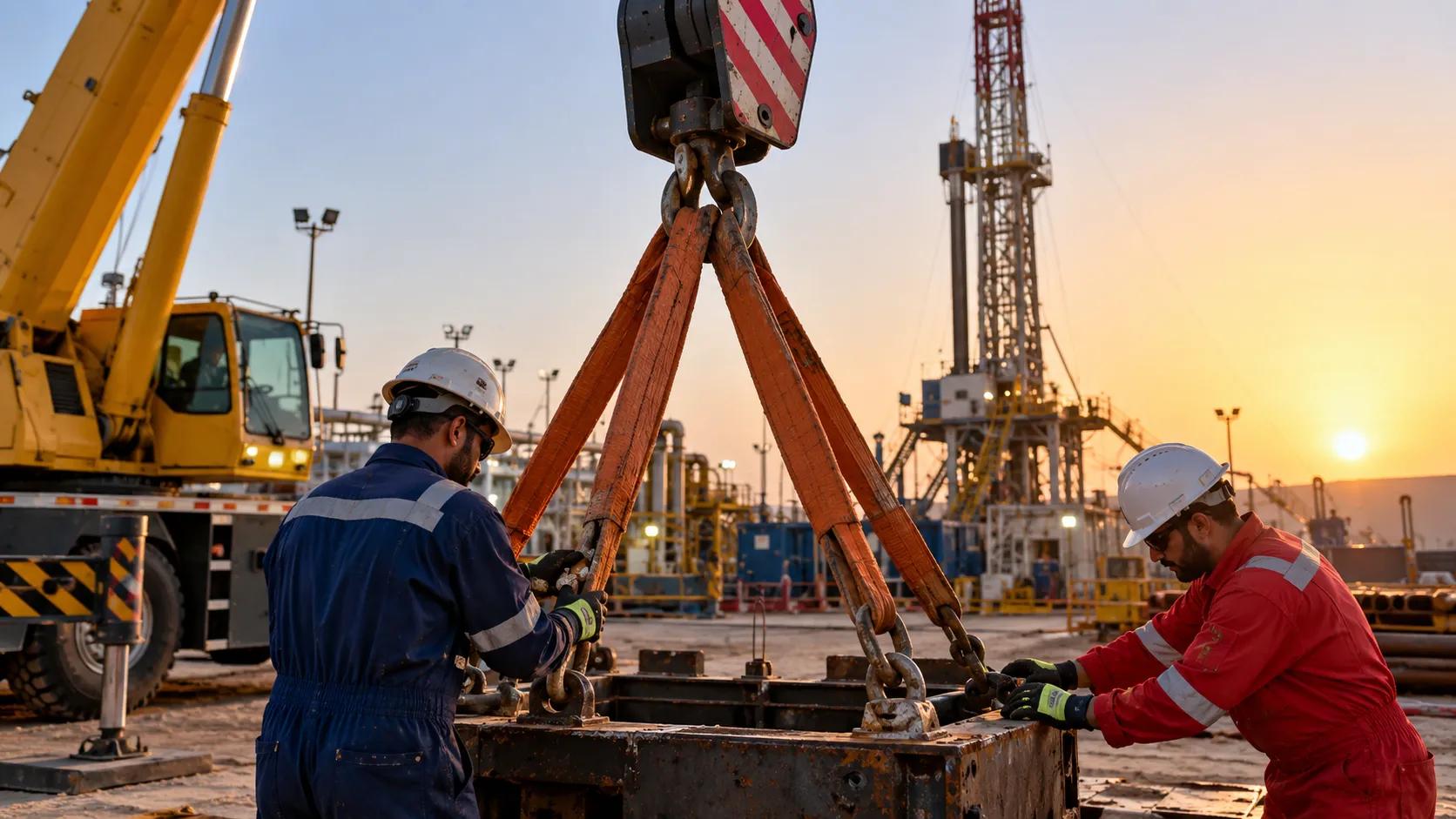
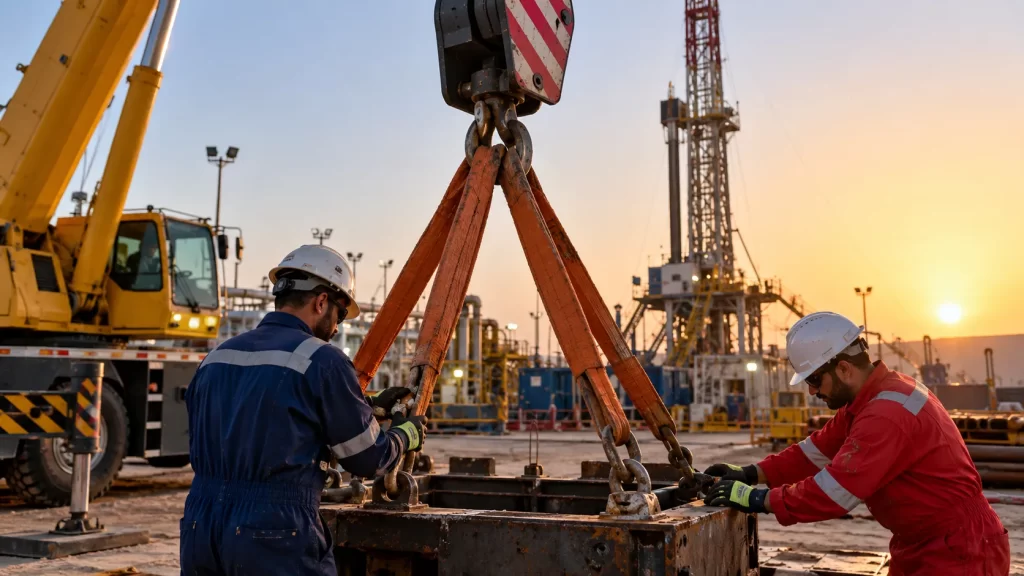
Lifting equipment is responsible for moving heavy loads, tools, components and personnel in demanding industrial and oilfield environments. A failure involving a crane, hoist, sling, shackle, lifting beam or other lifting component can cause equipment damage, dropped loads, production disruption and serious injury.
That is why Lifting Equipment Inspection should be treated as an essential part of equipment integrity and safe lifting operations rather than as a simple paperwork exercise.
A proper inspection program examines the condition, identification, function and safety-critical components of lifting equipment and determines whether the equipment remains suitable for its intended use. Depending on the equipment, application and applicable requirements, inspection may involve visual examination, functional checks, dimensional verification, load testing, non-destructive testing and detailed reporting.
For oil and gas operators, drilling contractors and asset owners, the objective is straightforward: identify deterioration or defects early, document the condition of the equipment and support safe, reliable lifting operations.
Eiger Engineering & Oilfield Services (EEOS) provides inspection and certification services for rig-based and mobile lifting equipment in Libya. Its current service scope includes slings, shackles, eye bolts, manual hoists, chain blocks, forklifts, mobile cranes, overhead traveling cranes, MEWPs, turnbuckles, safety harnesses and trolleys. EEOS states that its lifting inspections are performed against API RP 8B, LOLER and applicable local-authority requirements.
What Is Lifting Equipment Inspection?
Lifting Equipment Inspection is the systematic examination of equipment used to lift or lower loads to identify conditions that could affect safe operation.
The inspection may cover the main lifting machine as well as the components and accessories that connect the machine to the load.
Depending on the equipment, this can include:
- Cranes
- Hoists
- Forklifts used for lifting operations
- Mobile lifting equipment
- Overhead traveling cranes
- Manual hoists
- Chain blocks
- Slings
- Shackles
- Eye bolts
- Lifting beams
- Turnbuckles
- Lifting accessories
- Man-riding equipment
- MEWPs and related equipment
The exact inspection scope should be determined according to the equipment type, manufacturer requirements, operating environment, applicable standards and the risks associated with the lifting operation.
Lifting Equipment Inspection vs Routine Checks
A useful distinction is that routine operator checks, maintenance and formal examinations are not necessarily the same activity.
For example, HSE guidance explains that a thorough examination is a systematic and detailed examination of equipment and safety-critical parts by a competent person, followed by a written report.
Why Is Lifting Equipment Inspection Important?
Lifting equipment operates under significant mechanical loads. Components can deteriorate because of repeated loading, corrosion, wear, impact, poor storage, incorrect use, environmental exposure or inadequate maintenance.
A defect that appears minor during a normal visual check can become important when equipment is subjected to a heavy or dynamic load.
Benefits of Regular Inspection
Regular inspection helps organizations:
- Identify visible damage
- Detect deterioration
- Identify excessive wear
- Find corrosion and deformation
- Check safety-critical components
- Confirm equipment identification
- Verify condition against applicable requirements
- Support safe lifting operations
- Maintain inspection records
- Reduce the likelihood of equipment-related incidents
- Support equipment certification and compliance
- Improve maintenance planning
HSE guidance similarly emphasizes that examination and inspection are intended to verify that lifting equipment can continue to be safely used and to identify deterioration early enough for corrective action.
What Equipment Is Covered by Lifting Equipment Inspection?
The term lifting equipment can cover a broad range of machines, appliances and accessories. The precise scope depends on the application and the relevant requirements.
Lifting Gear Inspection
Lifting Gear Inspection focuses on equipment used to connect, secure, support or control a load during lifting.
Common examples include:
- Wire rope slings
- Chain slings
- Webbing slings
- Shackles
- Hooks
- Eye bolts
- Turnbuckles
- Lifting points
- Lifting clamps
- Spreader beams
- Lifting beams
- Other lifting accessories
These components can be small compared with a crane, but their failure can have the same consequence: an uncontrolled or dropped load.
Lifting Accessories Inspection
Lifting Accessories Inspection is particularly important because accessories form the connection between the lifting equipment and the load.
An accessory should not be treated as acceptable simply because it looks generally clean or undamaged. Identification, capacity, physical condition, configuration and suitability for the intended lifting application all matter.
Inspection can consider:
- Identification markings
- Safe working load information
- Pins and retainers
- Hooks and latches
- Welded areas
- Deformation
- Corrosion
- Wear
- Cracks
- Distortion
- Condition of attachment points
- Evidence of overloading
- Compatibility with the lifting system
The relevant inspection criteria should always be determined from the equipment requirements, manufacturer information and applicable standards.
Oilfield Lifting Equipment Inspection
Oilfield lifting environments can place additional demands on equipment.
Lifting operations may take place around drilling rigs, workshops, production facilities, maintenance areas and other operational locations where equipment is exposed to vibration, weather, dust, moisture, corrosive environments and repeated heavy-duty use.
Oilfield Lifting Equipment Inspection therefore needs to consider both the equipment itself and the conditions in which it operates.
Typical Oilfield Lifting Equipment
Typical oilfield lifting equipment can include:
- Mobile cranes
- Rig cranes
- Overhead traveling cranes
- Hoists
- Chain blocks
- Slings
- Shackles
- Lifting beams
- Eye bolts
- Turnbuckles
- Forklifts
- MEWPs
- Personnel lifting equipment
- Other rigging accessories
For oilfield operators, the inspection process should be connected to the wider asset-integrity and lifting-safety program rather than treated as an isolated certificate-generation activity.
EEOS describes its services as supporting oil and gas operators, drilling contractors and asset owners through inspection, testing, integrity assurance and third-party certification.
Rig Lifting Equipment Inspection
Rig Lifting Equipment Inspection focuses on lifting equipment used around drilling rigs and associated oilfield operations.
The inspection scope can include lifting devices and accessories used to move equipment, tools and materials around the rig site.
Conditions Affecting Rig Lifting Equipment
Particular attention may be required for equipment exposed to:
- High utilization
- Repeated loading
- Outdoor conditions
- Corrosive environments
- Mechanical impact
- Improper storage
- Frequent rig moves
- Heavy maintenance activities
A rigging system is only as reliable as its weakest safety-critical component. A crane may be in good condition, for example, but a damaged sling or deformed shackle can still create a serious lifting hazard.
This is why inspection programs should evaluate the complete lifting arrangement rather than focusing exclusively on the primary machine.
Hoisting Equipment Inspection
Hoisting Equipment Inspection examines equipment used to raise and lower loads.
Equipment Covered by Hoisting Equipment Inspection
Depending on the operation, this can include:
- Manual hoists
- Chain blocks
- Electric hoists
- Hydraulic lifting systems
- Winches
- Crane hoisting mechanisms
- Hooks
- Sheaves
- Wire rope systems
- Braking systems
- Load-bearing components
API identifies API RP 8B as the Recommended Practice covering procedures for inspection, maintenance, repair and remanufacture of hoisting equipment. API’s standards material also places RP 8B within its hoisting-equipment standards work.
For oilfield applications, the inspection program should be aligned with the applicable equipment requirements rather than relying on a generic checklist.
Lifting Machinery Inspection
Lifting Machinery Inspection looks at the mechanical and structural condition of equipment used to lift or lower loads.
Components Examined During Lifting Machinery Inspection
Depending on the machine, inspectors may examine:
- Structural members
- Hooks
- Sheaves
- Wire ropes
- Brakes
- Clutches
- Load-bearing components
- Guards
- Safety devices
- Controls
- Limit devices
- Hydraulic components
- Electrical systems
- Fasteners
- Connection points
- Supporting structures
Functional and operational checks may also be appropriate.
The inspection scope must reflect the equipment design and intended application.
Wire Rope Inspection
Wire Rope Inspection is a critical part of lifting safety because wire rope can deteriorate through repeated bending, abrasion, corrosion, crushing, deformation and broken wires.
What Is Checked During Wire Rope Inspection?
During an inspection, attention may be given to:
- Broken wires
- Corrosion
- Abrasion
- Kinking
- Crushing
- Birdcaging
- Diameter reduction
- Local deformation
- Heat damage
- End connections
- Terminations
- Sheave interaction
- Drum condition
- Lubrication condition
The condition of wire rope should be assessed against the applicable acceptance and rejection criteria rather than by appearance alone.
API’s publications identify API RP 9B as the recommended practice covering the application, care and use of wire rope for oilfield service.
Where deterioration reaches a level that could affect safe operation, the equipment should be removed from service and evaluated according to the applicable procedure.
Shackle Inspection
Shackle Inspection is another important element of lifting gear control.
Shackles may appear simple, but they are safety-critical load-connecting components.
What Is Checked During Shackle Inspection?
Inspection can consider:
- Shackle body condition
- Pin condition
- Threads
- Identification markings
- Rated capacity
- Deformation
- Wear
- Corrosion
- Cracks
- Unauthorized modification
- Evidence of overloading
- Correct assembly
The shackle should also be compatible with the intended lifting arrangement.
A damaged shackle should not be kept in service simply because it still appears capable of carrying a light load. The equipment must be assessed against the applicable criteria and intended use.
Lifting Beam Inspection
Lifting Beam Inspection focuses on structural and connection components used to distribute or support loads during lifting.
What Is Checked During Lifting Beam Inspection?
Depending on the design, inspection may include:
- Main structural members
- Welds
- Lifting points
- Pad eyes
- Shackles and connection points
- Bolted connections
- Deformation
- Corrosion
- Cracks
- Identification markings
- Rated capacity
- Evidence of overload
- Previous repair or modification
A lifting beam should be used only within its specified design limitations and capacity.
Inspection should also consider whether the beam’s current condition remains consistent with its intended lifting application.
Slings Inspection
Slings Inspection is essential because slings are directly involved in connecting loads to lifting equipment.
The type of sling determines the inspection considerations.
Types of Slings
Common types include:
- Wire rope slings
- Chain slings
- Webbing slings
- Synthetic slings
What Is Checked During Slings Inspection?
Inspectors may look for:
- Cuts
- Abrasion
- Broken wires
- Heat damage
- Corrosion
- Distortion
- Damaged fittings
- Damaged eyes
- Stitching damage
- Missing identification
- Deformation
- Chemical damage
- Evidence of overloading
HSE guidance notes that lifting accessories such as slings should be identifiable and that lifting equipment needs appropriate examination and inspection controls.
Man Riding Equipment Inspection
Man Riding Equipment Inspection requires particular attention because the consequences of equipment failure can directly affect personnel.
Equipment used for lifting people must be suitable for that purpose and subject to appropriate safety controls.
What Is Checked During Man Riding Equipment Inspection?
Depending on the equipment, inspection may consider:
- Structural condition
- Lifting points
- Guardrails
- Gates
- Locks
- Safety devices
- Attachment points
- Identification
- Rated capacity
- Emergency systems
- Controls
- Fall-protection arrangements
- Operational condition
Requirements for equipment used to lift people can be more demanding than those for equipment used only to lift materials.
For example, HSE guidance states that equipment used to lift people under LOLER is subject to six-monthly thorough examination intervals unless an appropriate examination scheme applies.
For operations in Libya, the applicable local requirements, client specifications, manufacturer instructions and relevant international standards should be established before the inspection program is defined.
What Is Checked During Lifting Equipment Inspection?
The inspection scope depends on the equipment, but a professional examination can consider several broad areas.
1. Equipment Identification
The inspector should be able to identify the equipment and its relevant characteristics.
This can include:
- Equipment ID
- Serial number
- Manufacturer
- Model
- Rated capacity
- Safe working load information
- Inspection history
- Certification records
Traceability is particularly important for lifting accessories that may be moved between locations.
2. Structural Condition
The physical structure is examined for conditions such as:
- Cracks
- Bending
- Deformation
- Corrosion
- Damage
- Distortion
- Loose components
- Damaged welds
- Unauthorized modifications
3. Mechanical Components
Depending on the equipment, mechanical components may include:
- Brakes
- Sheaves
- Hooks
- Pins
- Gears
- Bearings
- Chains
- Wire ropes
- Drums
- Clutches
- Connecting components
4. Safety Devices
Safety devices should be checked according to the equipment design.
These may include:
- Limit switches
- Safety latches
- Emergency stops
- Overload protection
- Warning systems
- Guards
- Interlocks
- Other protective devices
5. Functional Checks
Where applicable, the equipment may undergo operational checks to verify that relevant functions operate as intended.
6. Documentation
Inspection results should be documented clearly, including equipment identification, inspection date, findings, defects and required actions.
Common Defects Found During Lifting Equipment Inspection
Inspection programs commonly look for deterioration that could affect safe use.
Corrosion
Corrosion can reduce material condition and affect structural or load-bearing components.
Wear
Repeated use can cause wear in hooks, pins, chains, wire ropes, sheaves and other components.
Deformation
Bent hooks, distorted shackles, damaged lifting points or deformed structural components require assessment.
Cracking
Cracks can be safety-critical, particularly in load-bearing components.
Broken Wires
Wire rope deterioration can include broken wires and other forms of mechanical damage.
Damaged Slings
Cuts, abrasion, heat damage, chemical exposure and damaged fittings can affect sling integrity.
Missing Identification
Missing or unreadable identification can make it difficult to confirm capacity, traceability and inspection status.
Unauthorized Modification
Unapproved welding, drilling, repair or alteration can change the equipment’s intended characteristics.
Damaged Safety Devices
A lifting machine should not be considered safe simply because its main structure appears satisfactory. Safety devices and operational controls also matter.
How Often Should Lifting Equipment Be Inspected?
There is no single universal inspection interval that applies identically to every item of lifting equipment in every country and application.
The appropriate interval depends on factors such as:
- Equipment type
- Intended use
- Operating frequency
- Environmental conditions
- Manufacturer instructions
- Applicable regulations
- Client requirements
- Examination scheme
- Previous inspection findings
- Equipment history
- Risk associated with failure
Under LOLER, HSE explains that thorough examination may be required before first use, after installation or assembly in relevant circumstances, and periodically while equipment remains in service. HSE also explains that many items fall under six- or twelve-month examination intervals depending on the equipment and circumstances, unless an examination scheme specifies another interval.
For this reason, companies should not use an arbitrary calendar interval without considering the actual equipment and applicable requirements.
Lifting Equipment Inspection vs Routine Maintenance
Inspection and maintenance support each other, but they are not identical.
Inspection
Inspection evaluates the condition of equipment and identifies defects or deterioration.
Maintenance
Maintenance involves actions taken to preserve or restore equipment condition.
A machine can receive regular maintenance and still require an independent or formal examination where applicable.
HSE specifically notes that routine maintenance or servicing does not replace a required thorough examination.
Recommended Equipment Management Process
Pre-use checks → periodic inspections → thorough examinations where applicable → maintenance → corrective action → documentation → reinspection
What Happens When a Defect Is Found?
The response depends on the severity and nature of the defect.
Defect Assessment
A competent inspection process should identify:
- What component is affected?
- What defect was found?
- How serious is the defect?
- Does it affect safe operation?
- Is immediate removal from service required?
- Is repair possible?
- Is specialist assessment required?
- What corrective action is required?
- When should the equipment be re-examined?
Where a defect creates a safety risk, the equipment should not simply remain available for use while waiting for paperwork.
HSE guidance states that where a defect identified during thorough examination is, or could become, a danger to people, the user should be notified and effective action taken, including preventing use until the defect is remedied where necessary.
What Should a Lifting Equipment Inspection Report Include?
A useful inspection report should provide enough information for the equipment owner or operator to understand exactly what was examined and what was found.
Information in an Inspection Report
Depending on the applicable requirements, the report can include:
- Equipment identification
- Equipment type
- Manufacturer
- Serial number
- Rated capacity
- Location
- Inspection date
- Inspection scope
- Inspection method
- Components examined
- Findings
- Defects
- Photographs where appropriate
- Recommendations
- Required corrective actions
- Next examination date where applicable
- Inspector identification
- Certification or examination status
For thorough examinations under LOLER, HSE identifies specific reporting requirements including the examination date, next examination due date and significant defects identified.
The report should be clear enough that the equipment owner can use it for maintenance planning, compliance records and operational decision-making.
API RP 8B and Lifting Equipment Inspection
API RP 8B is particularly relevant to oilfield hoisting equipment.
What Is API RP 8B?
API describes RP 8B as the Recommended Practice for Procedures for Inspection, Maintenance, Repair, and Remanufacture of Hoisting Equipment. API’s standards committee structure also places RP 8B within the hoisting-equipment standards area.
This is important for oilfield operators because inspection should be based on the characteristics and intended service of the equipment rather than a generic industrial checklist.
Eiger’s lifting-equipment service page states that its lifting equipment inspections are performed against API RP 8B, LOLER and local-authority regulations.
For a specific project, the applicable edition, client specification, manufacturer requirements and local regulatory requirements should always be confirmed before inspection work begins.
Why Visual Inspection Alone May Not Be Enough
Visual examination is an important part of lifting equipment inspection, but it cannot necessarily identify every defect.
Depending on the component and suspected damage mechanism, additional examination or testing may be appropriate.
Inspection and Testing Methods
For example:
- Visual examination can identify visible deformation, corrosion and damage.
- Dimensional checks can identify changes in size or geometry.
- Functional testing can verify operation.
- Load testing may be appropriate where required by the equipment or inspection scheme.
- Non-destructive testing can be used to investigate certain surface or subsurface indications.
Eiger’s wider inspection capability includes visual testing and other NDT methods, although the appropriate method should be selected according to the component and inspection requirement rather than applied automatically.
Lifting Equipment Inspection in Oil & Gas Operations
The oil and gas industry depends heavily on lifting and handling activities.
Common Lifting Activities in Oil & Gas
Equipment may be used to:
- Move drilling tools
- Handle maintenance equipment
- Lift components
- Position machinery
- Support rig maintenance
- Move materials
- Load and unload equipment
- Handle tubulars and other operational items
This makes lifting-equipment integrity part of overall operational reliability.
A well-managed inspection program can help identify equipment deterioration before it develops into an operational interruption or safety event.
For drilling contractors and asset owners, the inspection record can also contribute to broader equipment-integrity management.
How to Choose a Lifting Equipment Inspection Company
When selecting an inspection provider, companies should look beyond the price of a certificate.
Questions to Ask an Inspection Provider
- Does the provider have relevant technical competence?
- Does the inspection scope match the equipment?
- Are inspectors appropriately qualified?
- Does the provider understand oilfield lifting applications?
- Are applicable standards clearly identified?
- Are inspection findings documented?
- Is equipment traceability maintained?
- Are defects clearly classified?
- Does the provider offer useful technical recommendations?
- Can the provider support site-based inspection?
- Can the provider provide certification or examination documentation where applicable?
- Does the provider have a documented quality-management system?
Eiger states that it serves oil and gas operators, drilling contractors and asset owners with inspection, testing, integrity assurance, maintenance and third-party certification services. Its certification page states that EEOS is ISO 9001:2015 certified and is an IADC member.
Lifting Equipment Inspection Services in Libya
For companies operating in Libya, choosing a provider familiar with oilfield equipment and local operating conditions can simplify inspection planning and reporting.
Eiger Engineering & Oilfield Services provides lifting equipment inspection and certification as part of its broader oilfield inspection services.
EEOS Lifting Equipment Inspection Scope
The current EEOS service scope includes:
- Slings
- Shackles
- Eye bolts
- Manual hoists
- Chain blocks
- Forklifts
- Mobile cranes
- Overhead traveling cranes
- MEWPs
- Turnbuckles
- Safety harnesses
- Trolleys
EEOS states that these inspections are performed to API RP 8B, LOLER and applicable local-authority requirements.
For a company planning an inspection, the scope should be agreed in advance based on the equipment inventory, operating environment, applicable requirements and client specifications.
A Practical Lifting Equipment Inspection Checklist
Before an inspection, organizations can prepare an equipment register containing:
- Equipment identification number
- Equipment description
- Manufacturer
- Model
- Serial number
- Rated capacity
- Location
- Previous inspection date
- Previous defects
- Maintenance history
- Certification records
During the inspection, the relevant components can then be assessed according to the equipment type.
Identification
- Is the equipment identifiable?
- Is capacity information available?
- Is the equipment traceable?
Physical Condition
- Is there corrosion?
- Is there deformation?
- Is there visible cracking?
- Is there excessive wear?
- Is there evidence of impact or overload?
Lifting Components
- Are hooks in acceptable condition?
- Are shackles correctly identified?
- Are pins and retainers satisfactory?
- Are slings free from unacceptable damage?
- Is wire rope in acceptable condition?
Mechanical Condition
- Are brakes and controls functioning?
- Are moving components in suitable condition?
- Are sheaves, drums and chains satisfactory?
Safety Systems
- Are safety devices functional?
- Are guards and protective devices present?
- Are relevant warning systems working?
Documentation
- Is the inspection history available?
- Are previous defects closed?
- Is the current report complete?
- Is the next examination date recorded where applicable?
This checklist is a practical starting point, not a substitute for the applicable inspection procedure, manufacturer requirements, engineering assessment or statutory examination scheme.