
Introduction
Drill pipes and Bottom Hole Assemblies (BHAs) are among the most critical components used in oil and gas drilling operations. These tools operate under extreme pressure, high temperatures, heavy loads, and challenging drilling conditions. Any failure in a drill pipe or BHA can result in costly downtime, equipment damage, safety risks, and project delays.
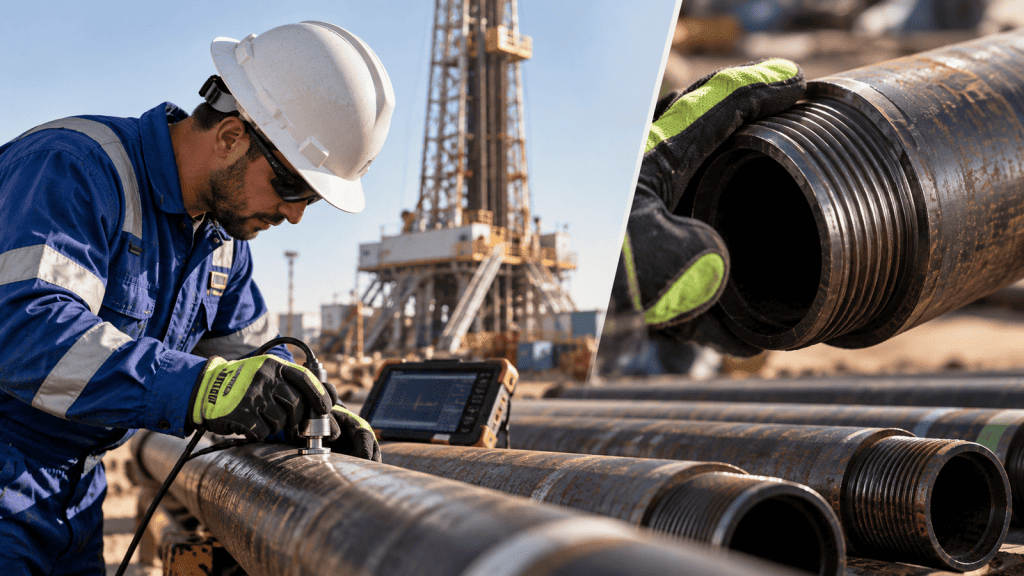
To maintain operational reliability and drilling efficiency, regular inspection programs are essential. Modern inspection processes rely heavily on NDT non destructive test methods to identify defects before they develop into serious failures. Through advanced non destructive testing NDT techniques, operators can assess equipment integrity without causing damage to valuable assets.
From offshore drilling rigs to onshore exploration projects, companies increasingly depend on non-destructive testing NDT services to improve safety, reduce maintenance costs, and extend equipment lifespan. These inspection programs also support the integrity of critical well-control equipment, including blowout preventers (BOPs), where reliable inspection and certification are essential for safe drilling operations.
Maintaining consistent inspection procedures and quality management practices is also important for companies working to meet recognized industry requirements, including API Spec Q2 for service supply organizations in the oil and gas industry.
This guide explores the importance of drill pipe and Bottom Hole Assembly inspection and explains how NDT technologies help protect critical drilling equipment.
Understanding Drill Pipe and Bottom Hole Assemblies
Drill pipes are heavy-duty steel tubes that transmit drilling fluid and rotational force from the drilling rig to the drill bit.
A Bottom Hole Assembly, commonly known as a BHA, consists of the components located at the lower section of the drill string. These components may include:
- Drill collars
- Stabilizers
- Reamers
- Mud motors
- Measurement While Drilling (MWD) tools
- Logging While Drilling (LWD) tools
- Drill bits
Together, these components form the drilling system responsible for creating and maintaining the wellbore.
Because BHAs operate in harsh downhole environments, they are exposed to:
- High mechanical stress
- Torsional loads
- Corrosion
- Abrasion
- Fatigue damage
- Vibration
Without regular inspection, minor defects can quickly escalate into catastrophic failures.
Why Drill Pipe Inspection Is Critical
Drill pipe failures can lead to significant operational and financial consequences.
Common problems include:
Fatigue Cracking
Repeated drilling cycles create stress concentrations that eventually develop into cracks.
Corrosion Damage
Exposure to drilling fluids, moisture, and corrosive environments can weaken pipe walls.
Mechanical Wear
Continuous rotation and contact with wellbore surfaces cause material degradation.
Connection Failures
Threaded connections are particularly vulnerable to stress and fatigue.
These issues often remain hidden until failure occurs. This is why NDT non destructive testing plays such an important role in preventive maintenance programs.
The Importance of BHA Inspection
Bottom Hole Assemblies contain numerous specialized components that directly affect drilling performance.
Defects within these tools can lead to:
- Reduced drilling efficiency
- Wellbore deviation
- Equipment failure
- Lost drilling time
- Increased maintenance costs
Regular inspection ensures each component remains fit for service and capable of performing under demanding drilling conditions.
Comprehensive inspections help identify:
- Surface cracks
- Internal flaws
- Corrosion damage
- Structural fatigue
- Weld defects
- Material deterioration
These findings allow operators to repair or replace components before failure occurs.
What Is NDT Non Destructive Test?
NDT non destructive test refers to inspection techniques used to evaluate materials, components, and equipment without causing damage.
Unlike destructive testing, NDT allows equipment to remain in service after inspection.
Benefits include:
- Early defect detection
- Reduced downtime
- Improved safety
- Extended equipment lifespan
- Lower maintenance costs
- Improved operational reliability
Oil and gas operators rely on NDT programs to ensure drill pipes and BHA components remain safe and operational.
Common NDT Non Destructive Testing Methods for Drill Pipe Inspection
Several NDT non destructive testing techniques are used to inspect drilling equipment.
Magnetic Particle Inspection (MPI)
Magnetic Particle Inspection detects surface and near-surface defects in ferromagnetic materials.
It is commonly used to identify:
- Fatigue cracks
- Stress fractures
- Surface discontinuities
MPI is one of the most widely used inspection methods for drill pipes and threaded connections.
Ultrasonic Testing (UT)
Ultrasonic Testing uses high-frequency sound waves to identify internal defects.
Benefits include:
- Accurate wall thickness measurements
- Internal crack detection
- Corrosion assessment
- Material integrity evaluation
UT is particularly valuable for evaluating drill pipe wall conditions.
Electromagnetic Inspection (EMI)
Electromagnetic Inspection identifies flaws within drill pipe bodies and connections.
EMI systems can detect:
- Corrosion
- Metal loss
- Fatigue damage
- Internal defects
This method is commonly used during routine drill pipe inspection programs.
Dye Penetrant Testing (PT)
Penetrant Testing reveals surface-breaking defects that may not be visible during visual inspections.
This method is often used for:
- Stabilizers
- Drill collars
- BHA components
- Weld inspections
The Role of X Ray Non Destructive Testing NDT
Among advanced inspection technologies, x ray non destructive testing NDT provides highly detailed images of internal component structures.
Radiographic testing uses X-rays or gamma rays to reveal hidden defects.
Applications include:
Weld Inspection
Radiographic testing identifies:
- Porosity
- Inclusions
- Lack of fusion
- Internal cracking
BHA Component Evaluation
Complex drilling tools often contain internal features that cannot be inspected visually.
X-ray testing helps inspectors identify hidden structural issues before equipment returns to service.
Quality Assurance
Manufacturers frequently use radiographic testing to verify the quality of newly fabricated drilling components.
Because of its accuracy and reliability, x ray non destructive testing NDT remains a valuable tool for critical inspection applications.
Benefits of Non-Destructive Testing NDT Services
Professional non-destructive testing NDT services offer significant advantages to drilling contractors and oilfield operators.
Improved Safety
Early detection of defects helps prevent equipment failures that could endanger personnel.
Reduced Downtime
Identifying problems before failure minimizes unplanned shutdowns.
Lower Maintenance Costs
Preventive maintenance is significantly less expensive than emergency repairs.
Regulatory Compliance
Inspection programs help organizations meet industry standards and operational requirements.
Increased Equipment Lifespan
Proper inspection and maintenance extend the service life of valuable drilling assets.
These benefits contribute directly to operational efficiency and profitability.
Inspection Standards for Drill Pipe and BHA Components
Oil and gas operators follow strict inspection standards to ensure equipment reliability.
Industry standards often require:
- Routine visual inspections
- Scheduled NDT evaluations
- Dimensional verification
- Connection inspections
- Documentation and reporting
Inspection intervals depend on:
- Equipment usage
- Operating conditions
- Drilling environment
- Regulatory requirements
Following established inspection standards helps organizations maintain consistent safety and quality performance.
Common Drill Pipe Defects Found During Inspection
Professional inspectors frequently identify several recurring issues during drill pipe evaluations.
Washouts
Internal erosion caused by drilling fluid flow can weaken pipe walls.
Pitting Corrosion
Localized corrosion creates small cavities that reduce structural integrity.
Thread Damage
Connections often experience wear and mechanical damage.
Fatigue Cracks
Repeated stress cycles eventually lead to crack formation.
Mechanical Wear
Continuous drilling operations gradually remove material from pipe surfaces.
Identifying these issues early reduces the likelihood of unexpected failures.
How Technology Is Transforming Drill Pipe Inspection
Inspection technology continues to evolve rapidly.
Modern systems improve inspection speed, accuracy, and reporting capabilities.
Emerging technologies include:
Automated Inspection Systems
Automated equipment increases consistency and reduces human error.
Digital Reporting Platforms
Cloud-based systems provide instant access to inspection records.
Artificial Intelligence
AI-powered analytics help identify trends and predict equipment failures.
Advanced Imaging Technologies
Enhanced imaging systems improve defect detection and analysis.
These innovations are helping organizations create more proactive maintenance strategies.
Choosing the Right NDT Inspection Provider
Selecting a qualified inspection provider is essential for maintaining drilling equipment reliability.
When evaluating providers, consider:
Industry Experience
Choose a company with extensive oilfield inspection expertise.
Certified Technicians
Ensure inspectors hold recognized NDT certifications.
Advanced Equipment
Modern inspection technologies improve accuracy and reliability.
Comprehensive Reporting
Detailed inspection reports support maintenance planning and compliance efforts.
Safety Record
Strong safety performance demonstrates professionalism and operational excellence.
A qualified inspection partner helps ensure equipment remains safe, compliant, and operational.
Future of Drill Pipe and BHA Inspection
The future of drilling equipment inspection will focus on predictive maintenance and digital transformation.
Key trends include:
- AI-assisted inspections
- Real-time condition monitoring
- Automated defect recognition
- Remote inspection capabilities
- Advanced radiographic imaging
These technologies will allow operators to identify problems earlier and make more informed maintenance decisions.
Conclusion
Drill pipe and Bottom Hole Assembly inspection plays a critical role in maintaining safe and efficient drilling operations. Because these components operate under extreme conditions, regular inspections are essential for preventing failures and protecting valuable assets.
Modern NDT non destructive test methods provide accurate and reliable evaluations without damaging equipment. Through non destructive testing NDT programs, operators can identify hidden defects, improve safety, reduce downtime, and extend equipment lifespan.
From ultrasonic testing and magnetic particle inspection to advanced x ray non destructive testing NDT applications, modern inspection technologies provide the insights needed to maintain drilling equipment reliability.
Organizations that invest in professional non-destructive testing NDT services gain stronger operational performance, improved safety, and long-term cost savings while ensuring drilling operations remain productive and compliant.



One Response